
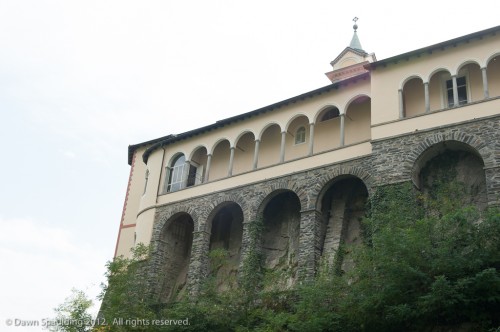
Locarno’s main sight, Santuario della Madonna del Sasso, sits partway up a steep hill and therefore requires a bit of effort to reach. Monk Bartolomeo d’Ivrea built this sanctuary in 1480 after the Virgin Mary allegedly appeared to him in a vision. Though there is a funicular that runs to the sanctuary, you still have […]
Archive | Cathedrals, Doms, Mosques, Temples, Etc. RSS feed for this section
Ghiffa
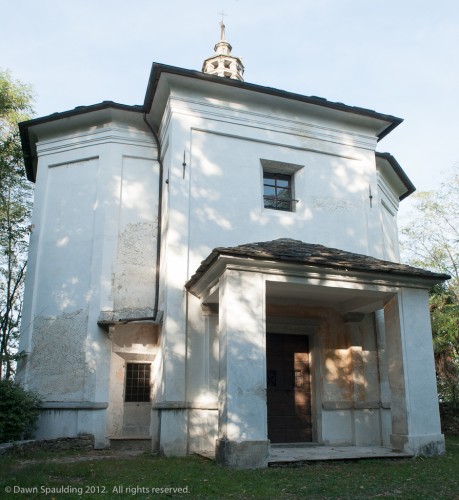
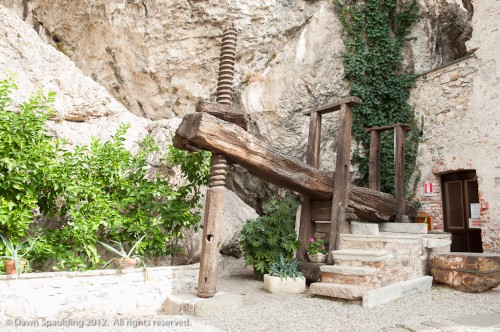
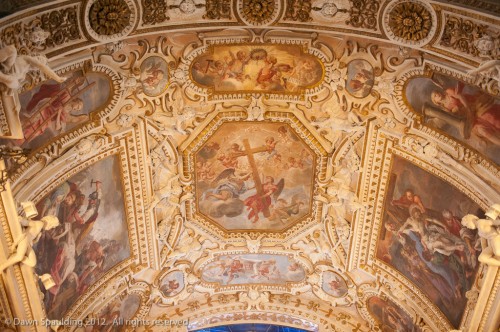
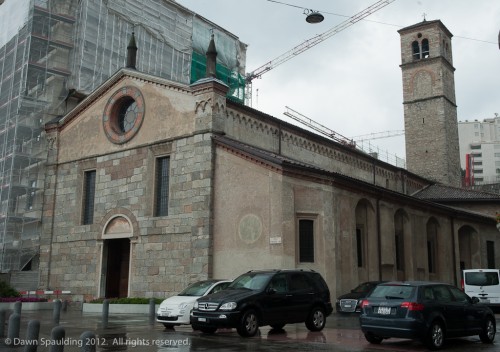
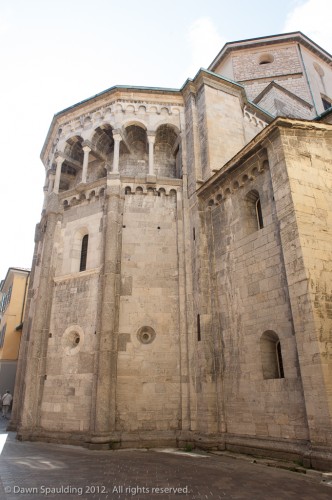
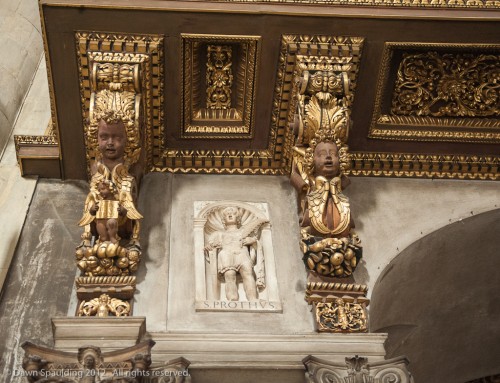
You have to watch signs very carefully to catch the turn uphill to Ghiffa. The main attraction here is the 17th century Il Sacro Monte della SS. Trinità di Ghiffa, an unfinished Baroque complex with a sanctuary church, three chapels and the portico of the Via Crucis. The complex sits at the base of Mount […]
Santa Caterina del Sasso
Santa Caterina del Sasso clings dramatically to the rocky cliff on the east side of Lake Maggiore. The hermitage was founded in the 12th century by Alberto Besozzi, a wealthy local merchant. After surviving a brutal storm while crossing the lake, Besozzi decided to stay here and live out his life in peace. Besozzi constructed […]
La Collegiata di San Vittore
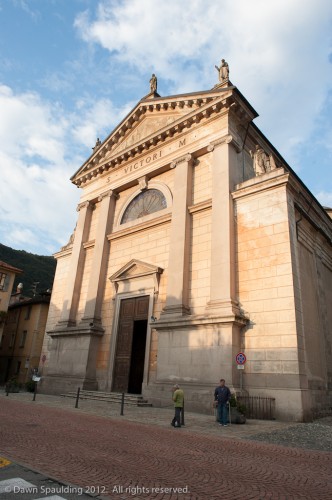
This church sits in the middle of Cannobio and was built in the 18th century over an earlier medieval Romanesque church. The Romanesque bell tower is from the 12th century. The neoclassical façade is from the 19th century. The spire was rebuilt in the 20th century. Of course, the main attraction here is the Holy […]
Il Santuario della SS. Pietà di Cannobio
The Sanctuary of the Santissima Pietà was constructed to commemorate a dramatic event: The Miracle of the Holy Rib. What happened? In 1522, a painting of a Pietà (a subject in Christian art depicting the Virgin Mary cradling the dead body of Jesus) began to emit blood and tears. The next night, in the same […]
Chiesa di Santa Maria degli Angioli, or Saint Mary of the Angels
This Romanesque-style church looks plain from the outside, but step inside and you’ll be wowed by the frescos painted by the Italian Renaissance artist Bernardino Luini. The main draw is the elaborate crucifixion scene. Luini’s Last Supper is depicted on the side wall. It is divided into three panels because it had originally been on […]
Basilica di San Fedele
Basilica di San Fedele was constructed in the 6th century, though its façade was rebuilt in the 20th century. The rose windows and frescoes are from the 16th century. The church is designed in the Lombard Romanesque style. It has a unique circular layout with three apses and three naves. The basilica is dedicated to […]
Duomo di Como
Como’s impressive marble Duomo was designed by Lorenzo degli Spazzi. Construction began in 1396 and lasted 300 years. It’s considered the last Gothic cathedral in Italy. Though its style is mostly Gothic, Romanesque, Renaissance and baroque elements are also present. It was built on the ruins of the Romanesque basilica dedicated to Santa Maria Maggiore. […]
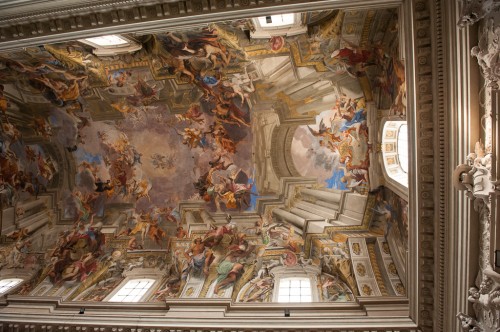
Chiesa di Sant’Ignazio di Loyola a Campo Marzio
This Baroque Roman Catholic church was dedicated to Jesuit founder Ignatius of Loyola. It was constructed in the 16th century and functioned as a rectory church to adjacent Collegio Romano. The college quickly outgrew the original church, so in the 17th century the massive structure we see today was built. This church has a Latin […]
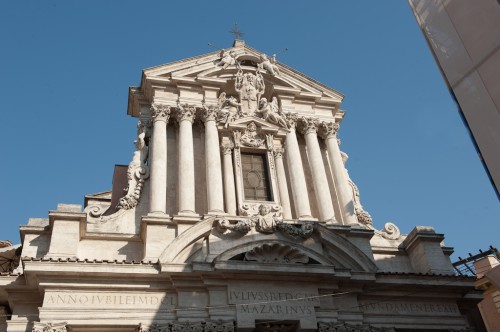
Santi Vincenzo e Anastasio a Trevi
Santi Vincenzo e Anastasio may look like an ordinary church, but it contains a rare treasure: 25 popes’ embalmed hearts. In marble urns. This was originally the parish church for the Quirinal Palace, which was built as a papal summer residence (it’s now the president’s home). The popes who inhabited the palace, from Sixtus V […]
